White oak · est. 1921
A white oak stood here
for 105 years.
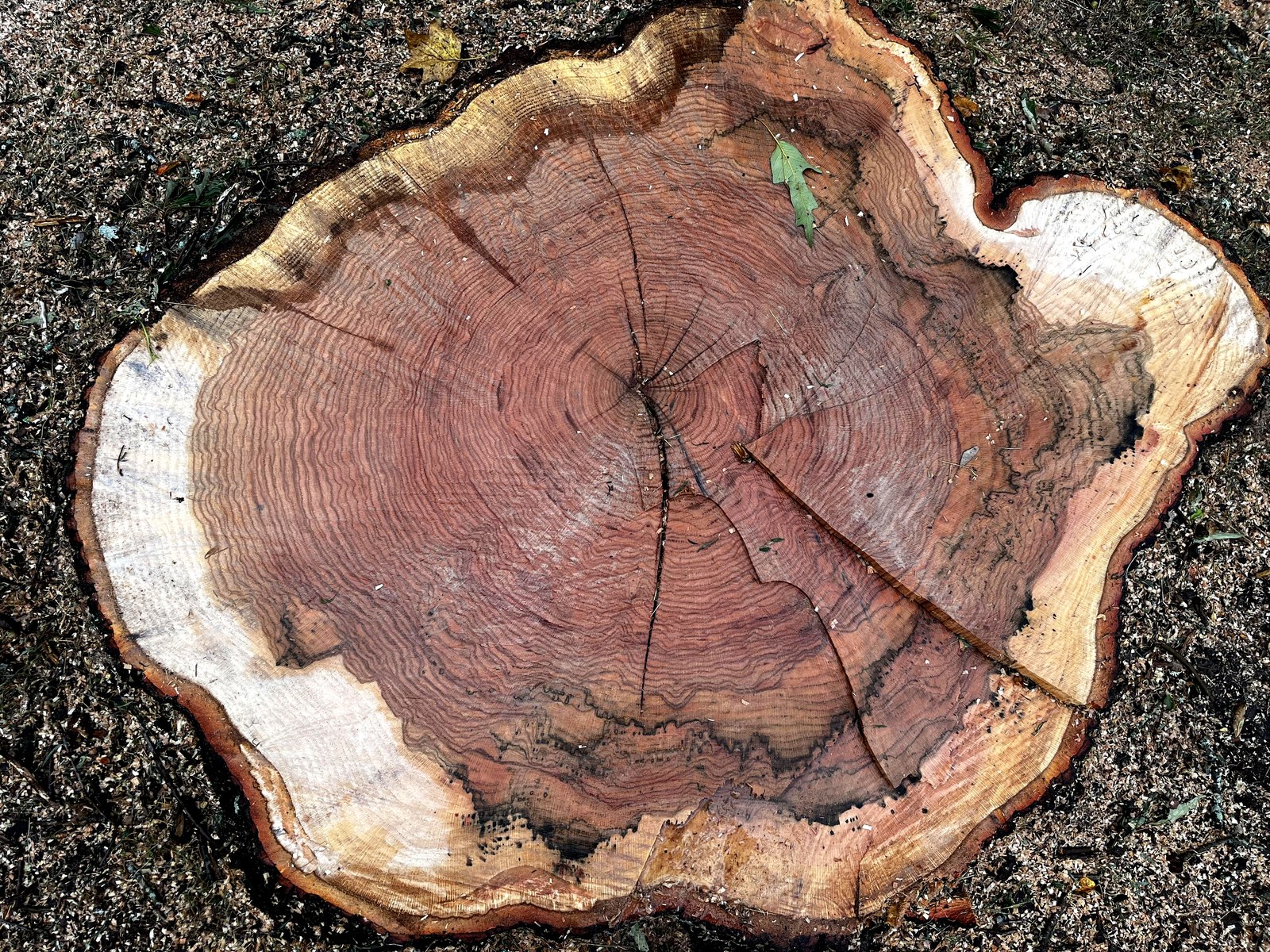
It sprouted before the Depression, before television, before either of its own longest branches had names for the wars they'd outlive. On September 3, 2026, it came down. What's left is a stump, a spiral of rings, and a record of everything that happened while it quietly got taller.
Read its rings ↓Every ring is a year it was alive
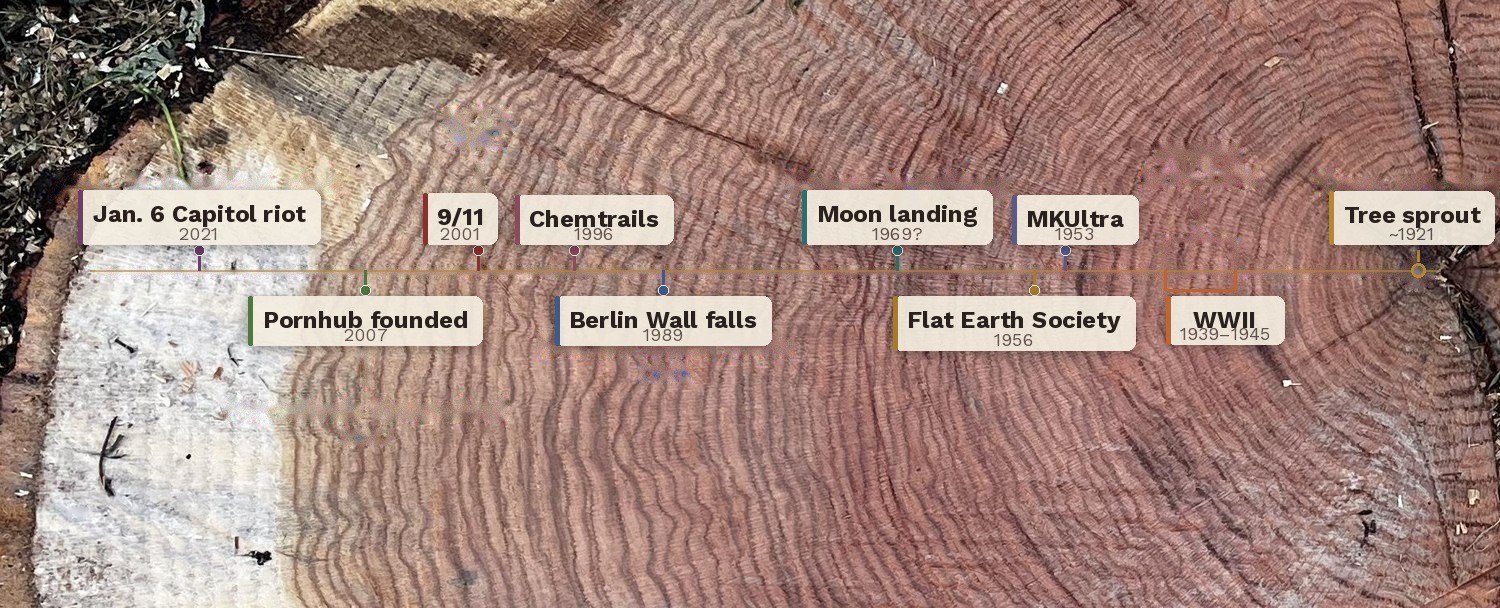
The chart below is built from real measurements — each boundary was traced from the actual cut face, pith to bark. Hover or tap a ring to see the year. The marked rings line up with dates that happened somewhere else while this tree just kept growing.
Pick a year, any year
Every ring on this tree lines up with a year something else, somewhere, was happening. Type one in from 1921 to 2026 and find out what — the tree was busy that year too, but nowhere near as busy as this.
How the rings were counted
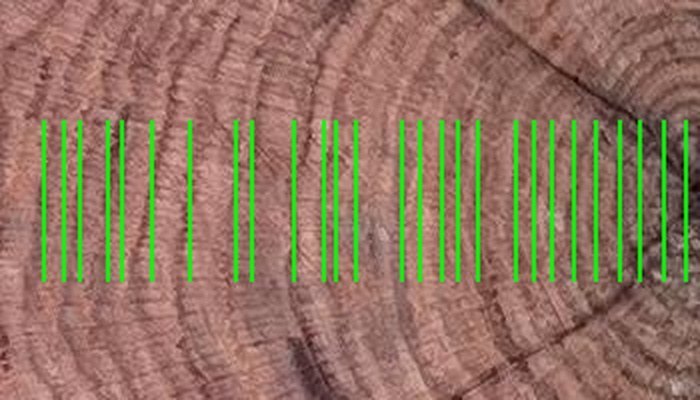
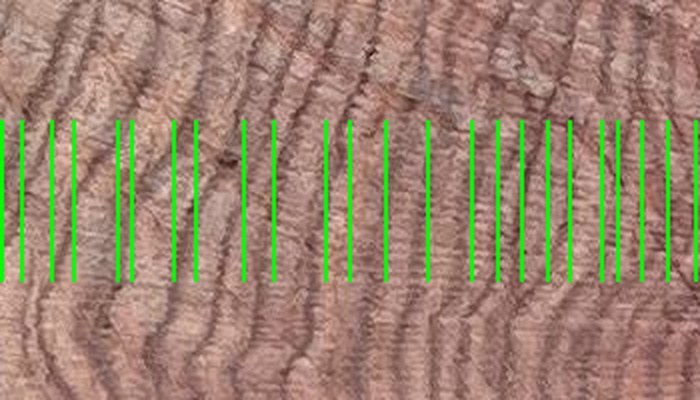
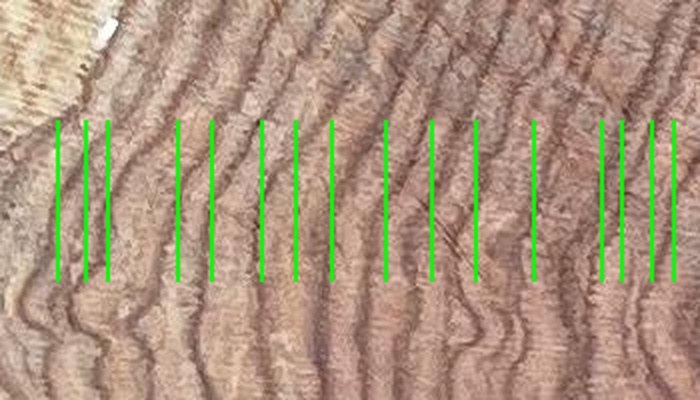
No coring tool, just two photographs and some signal processing. The pith (dead center) was located from where the internal cracks converge, then two straight paths were traced from pith to bark in different directions. Brightness was sampled along each path and run through peak-detection to find every ring boundary, which were then checked by eye against close-up crops. The two independent radii agreed within a few rings of each other — 106 and 110 — giving confidence in the count. The species — white oak — was confirmed separately, not guessed from the wood.
The lighter sapwood band near the bark is lower-contrast and the hardest part to count precisely — it's the main source of uncertainty in the final number.
Verification detail
Close-up crops with the detected ring positions marked in green, checked by eye against three points along the radius: near the pith, through the mid-section, and out near the bark.